Your skincare routine only works when it matches your skin type. Many people guess their type and buy products based on trends. That leads to irritation, breakouts, and wasted money.
Let’s fix that.
Here is why skin type matters and how to identify yours with confidence.
Why Skin Type Matters
Your skin produces oil. It loses water. It reacts to the environment. The balance between oil and water defines your skin type.
When you use the wrong routine, you disrupt that balance.
Too harsh? Your skin overproduces oil.
Too heavy? Your pores clog.
Too light? Your skin feels tight and flaky.
Knowing your type gives you direction. It removes guesswork.
Let’s break it down…
The Five Main Skin Types
Most dermatologists group skin into five categories:
- Normal
- Oily
- Dry
- Combination
- Sensitive
Each type behaves in predictable ways.
1. Normal Skin
Normal skin feels balanced. It does not feel greasy. It does not feel tight.
Signs of Normal Skin
- Small to medium pores
- Smooth texture
- Rare breakouts
- Even tone
- No visible flaking
Oil production stays steady. Water loss stays controlled.
Still, normal skin needs care. Sun damage and harsh cleansers can change it over time.
2. Oily Skin
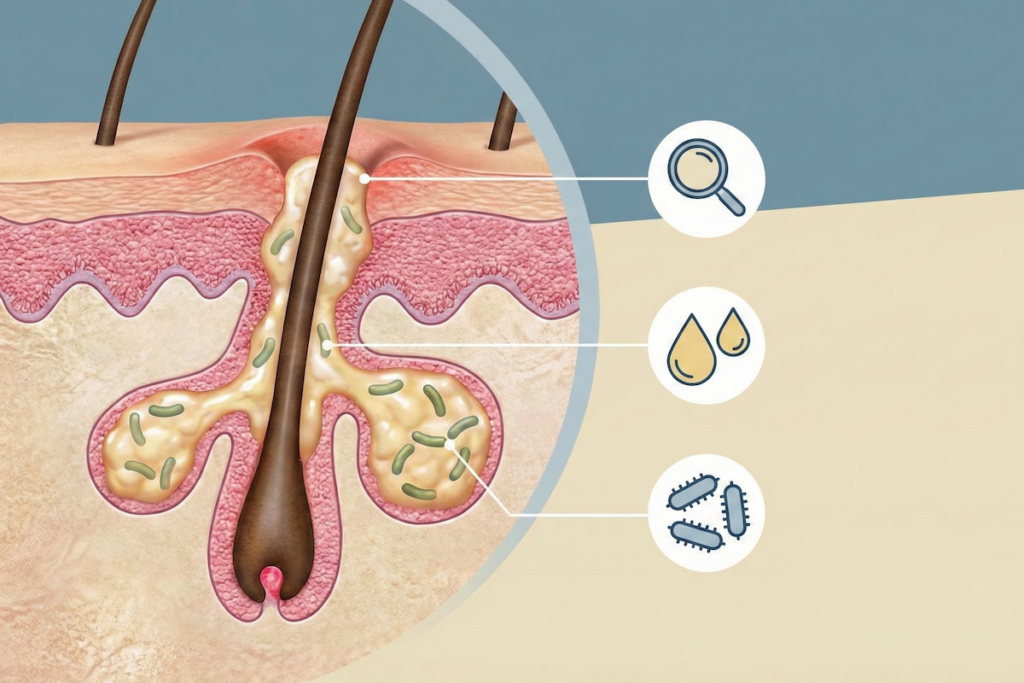
Oily skin produces excess sebum. Sebum protects your skin, but too much causes problems.
Signs of Oily Skin
- Shiny appearance, especially mid day
- Enlarged pores
- Frequent blackheads
- Acne breakouts
- Makeup slides off quickly
Oil glands work overtime. Genetics often play a role. Hormones also increase oil output.
Many people strip oily skin with strong cleansers. That backfires. Your skin senses dryness and produces even more oil.
Balance works better than aggression.
3. Dry Skin
Dry skin lacks oil. It struggles to hold moisture.
Signs of Dry Skin
- Tight feeling after washing
- Rough texture
- Flaking
- Dull tone
- Fine lines that look deeper
Dry skin feels uncomfortable in cold or windy weather. It may sting when you apply certain products.
Dry skin differs from dehydrated skin. Dry means low oil. Dehydrated means low water. A person can have oily and dehydrated skin at the same time.
We will cover that difference in another article.
For now, remember this: dry skin needs support, not harsh exfoliation.
4. Combination Skin
Combination skin shows traits from more than one type.
Most people with combination skin have:
- Oily T zone
- Normal or dry cheeks
Your forehead, nose, and chin produce more oil. Cheeks may feel tight.
This type requires balance. You may treat different areas differently.
One routine does not always fit all zones.
5. Sensitive Skin
Sensitive skin reacts easily. It flushes, stings, or develops rashes.
Signs of Sensitive Skin
- Burning after applying products
- Redness
- Itchy patches
- Frequent irritation
- Reaction to fragrance
Sensitive skin can overlap with other types. You can have oily sensitive skin or dry sensitive skin. Sensitivity often stems from a weakened skin barrier.
Let’s talk about that next…
The Skin Barrier and Its Role
Your skin barrier sits on the outer layer of your skin. It keeps moisture in and irritants out. When the barrier weakens, skin becomes reactive.
Causes of barrier damage include:
- Over exfoliation
- Harsh cleansers
- Too many active ingredients
- Sun exposure
- Extreme weather
If your skin feels raw, tight, and irritated, your barrier may need repair. Calm routines work best during this phase.
How to Identify Your Skin Type at Home
You do not need expensive tools. Try this simple test:
Step 1: Wash Your Face
Use a gentle cleanser. Pat dry. Do not apply products.
Step 2: Wait One Hour
Let your skin rest.
Step 3: Observe
Check your skin in natural light.
- Shiny all over? Likely oily.
- Tight and flaky? Likely dry.
- Shiny T zone only? Likely combination.
- Comfortable and balanced? Likely normal.
- Red or irritated? Possibly sensitive.
Blotting paper also helps. Press it on different areas. Heavy oil on all sections suggests oily skin. Oil only in T zone suggests combination.
Simple observation works.
Can Skin Type Change?
Yes.
Hormones shift oil production. Climate affects moisture levels. Age reduces natural oil output.
Teenagers often have oily skin. In your 30s and 40s, oil production slows. Skin may lean drier.
Pregnancy can also trigger changes.
Season matters too. Winter dries skin. Summer increases oil.
So check your skin periodically.
Common Mistakes When Identifying Skin Type
Many people confuse temporary conditions with permanent type.
Breakouts do not always mean oily skin. Dry skin can break out when dead skin builds up.
Flaking does not always mean dryness. Over exfoliation can cause peeling even in oily skin.
Another mistake involves using harsh products before testing. If you wash with a stripping cleanser, your skin will feel tight no matter the type.
Keep your testing routine neutral.
Skin Type vs Skin Condition
Skin type stays fairly consistent. Skin conditions change.
Conditions include:
- Acne
- Dehydration
- Hyperpigmentation
- Rosacea
You treat conditions within your skin type.
For example:
Oily skin with acne needs oil control plus pore care.
Dry skin with acne needs hydration plus gentle exfoliation.
See the difference?
Why Guessing Leads to Problems
Using the wrong routine creates imbalance.
Dry skin using foaming cleansers may crack and sting.
Oily skin using heavy creams may clog pores.
Sensitive skin using fragrance may flare up.
Match routine to type. Adjust slowly. Observe changes.
That keeps your skin stable.
When to See a Dermatologist
If your skin shows:
- Persistent redness
- Painful cysts
- Severe peeling
- Rash that spreads
Seek medical advice.
Chronic skin issues need professional diagnosis. Conditions like eczema and rosacea require targeted treatment.
Self diagnosing has limits.
Quick Summary of Each Type
Normal
Balanced, smooth, minimal issues.
Oily
Shiny, enlarged pores, frequent breakouts.
Dry
Tight, flaky, rough.
Combination
Oily T zone, dry or normal cheeks.
Sensitive
Reacts easily, redness, stinging.
Keep this list handy when building routines.
Next Steps
Stand in front of a mirror. Wash your face. Wait one hour. Observe carefully. Write down what you notice. Repeat the test in another season.
Once you know your skin type, you can:
- Choose suitable cleansers
- Select proper moisturizers
- Avoid irritating ingredients
- Prevent over treatment
Clarity leads to calmer skin. That is where smart skincare begins.